
Holistic Functional Medcine

Holistic Functional Medicine

Bridging the Gap Between Conventional Medicine and Whole-Person Health
 
A Different Way of Looking at Health
 
At Kabari Wellness Institute, we believe the future of healthcare is not about choosing between conventional medicine and natural approaches. It is about understanding the strengths of each, using science responsibly, and bringing the pieces together around the individual patient.
 
That is the foundation of our approach to Holistic Functional Medicine.
 
Conventional medicine is indispensable. It excels in emergency care, acute illness, surgery, advanced diagnostic imaging, infectious disease management, pharmaceuticals when appropriately indicated, and the diagnosis and treatment of serious disease.
But many people living with chronic symptoms ask a different set of questions:
 
Why am I not feeling well?
What factors may be contributing to this problem?
Why do my symptoms keep returning?
How are my different health problems connected?
What can I change to improve the way my body functions?
 
Holistic Functional Medicine provides a framework for investigating those questions.
 
The National Institutes of Health’s National Center for Complementary and Integrative Health describes whole-person health as looking beyond isolated organs and considering the interconnected biological, behavioral, social, and environmental factors that influence health. It also recognizes integrative healthcare as the coordinated use of conventional and complementary approaches. (NCCIH)
 
At Kabari Wellness Institute, we bring this whole-person philosophy into a comprehensive, individualized approach to health.

What Is Holistic Functional Medicine?

Holistic Functional Medicine is a patient-centered, systems-oriented approach that seeks to understand how different aspects of a person’s physiology, lifestyle, nutrition, environment, history, and health interact.
 
Rather than viewing the body as a collection of unrelated parts, we recognize that its systems constantly communicate with one another.
 
Your digestive system can influence nutritional status and metabolism. Sleep can affect appetite, stress physiology and glucose regulation. Physical activity influences cardiovascular, musculoskeletal and metabolic health. Nutrition affects virtually every physiological system. Chronic stress can influence sleep, behavior and overall well-being.
 
This interconnectedness is why two people with the same diagnosis may have very different histories, contributing factors, needs and responses to care.
 
Functional medicine has been described in the scientific literature as a patient-centered, systems-biology approach focused on understanding individual function and dysfunction and developing personalized therapeutic programs. (PubMed Central (PMC))
 
At Kabari Wellness Institute, we expand that concept through a holistic perspective—looking at the person, not simply the diagnosis.
 

We Don’t Just Ask, “What Disease Do You Have?”

We also ask:
 
“What is happening within your body, and what may be contributing to it?”
 
A diagnosis is important. It gives a condition a name and can guide necessary medical treatment.
 
But the diagnosis may not tell the entire story.
 
For example, a person experiencing fatigue may need evaluation for anemia, thyroid disorders, sleep disorders, medication effects, infection, cardiovascular disease or other medical conditions.
 
At the same time, we may need to examine nutrition, sleep quality, stress, physical activity, dietary patterns, gastrointestinal symptoms and other factors affecting that person’s health.
 
Our objective is not to ignore the diagnosis. It is to understand the person who has the diagnosis.
 

The Kabari Wellness Institute Approach

Investigate → Understand → Support → Reassess → Optimize
 
We approach each patient as an individual.
Instead of automatically applying the same wellness program to everyone with a particular condition, we seek to understand the patient’s health history and identify reasonable, modifiable factors that may be affecting health and function.

Our process may include:

We look beyond the chief complaint and explore the patient’s medical history, symptoms, medications and supplements, nutrition, activity, sleep, stress, gastrointestinal health, previous injuries, lifestyle and environmental exposures where relevant.

When clinically appropriate and within the scope of the treating provider, laboratory findings and other health information can help us better understand patterns involving areas such as metabolic health, blood sugar regulation, nutritional status, inflammation, thyroid function and other physiological systems.
Laboratory testing is interpreted in the context of the patient’s symptoms, history and conventional medical diagnoses not in isolation.

We examine areas that may be appropriate to address, including:
Nutrition and dietary patterns, Nutrient adequacy, Physical inactivity, Sleep, Stress, Weight and body composition, Digestive health
Musculoskeletal dysfunction, Medication and supplement considerations, Lifestyle habits, Environmental and occupational factors where relevant
Cardiometabolic risk factors

Recommendations are personalized rather than automatically determined by a diagnosis.

Depending upon the individual, a wellness plan may incorporate nutrition, exercise, corrective movement, stress-management strategies, sleep optimization, chiropractic or other physical approaches, and carefully selected nutritional or botanical support when appropriate.

Health is dynamic.

We monitor symptoms, function, objective measurements and appropriate laboratory findings to determine whether the plan should be continued, modified or referred for additional medical evaluation.
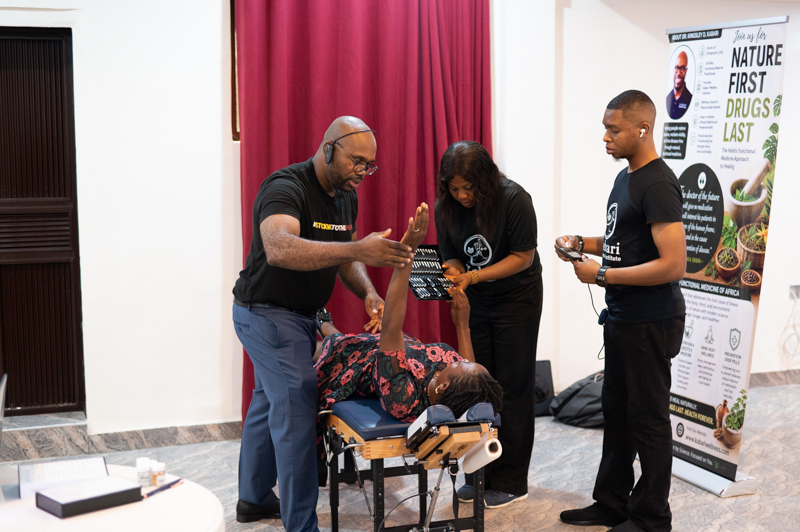
Food and Nutrition as Foundations of Health

Nutrition is one of the most powerful modifiable influences on long-term health.
 
We therefore spend considerable time helping patients understand what they eat—not simply handing them another bottle of supplements.
 
Our approach emphasizes a nutrient-dense, whole-food foundation whenever possible.
 
We may evaluate dietary patterns, protein intake, fiber, hydration, micronutrient adequacy and the patient’s relationship with highly processed foods, excessive added sugars and other dietary factors.
 
When nutritional supplementation is appropriate, it should supplement a thoughtful health strategy—not replace good nutrition or necessary medical care.
 
Looking at the Body as an Interconnected System
 
A central principle of our approach is that the body does not operate in isolated compartments.
 
We may evaluate relationships involving:
 
Digestive Health
 
Digestion, nutrient absorption, dietary tolerance and gastrointestinal function can influence overall well-being.
 
Metabolic Health
 
Blood glucose regulation, body composition, physical activity, nutrition and cardiovascular risk are closely interconnected.
 
Hormonal and Endocrine Health
 
Thyroid, reproductive and other endocrine systems require appropriate medical evaluation while also being considered in the context of nutrition, sleep, stress and metabolic health.
 
Musculoskeletal and Neurological Function
 
Movement, pain, mobility, physical conditioning and nervous-system function can have significant effects on quality of life and overall health.
 
Stress and Sleep
 
Chronic stress and inadequate sleep can affect behavior, metabolic health, recovery and numerous physiological processes.
 
This interconnected view is consistent with the growing scientific interest in whole-person health, which examines health across multiple biological and behavioral systems rather than treating every problem as completely independent. (NCCIH).

Bridging the Gap With Conventional Medicine

This Is Integration—Not Opposition
 
One of the most important principles of Kabari Wellness Institute is that Holistic Functional Medicine should not be positioned as an enemy of conventional medicine.
 
We believe patients benefit when appropriate healthcare disciplines communicate and work together.
 
There are circumstances in which medication is necessary.
 
There are circumstances in which surgery is necessary.
 
There are circumstances in which emergency medical intervention saves lives.
 
There are also circumstances in which nutrition, physical activity, weight management, sleep, stress reduction, rehabilitation and other lifestyle interventions can make meaningful contributions to health.
 
The goal should not be:
 
Natural medicine OR conventional medicine.
 
The better question is:
 
What combination of evidence-informed strategies is appropriate for this individual?
 
The NIH’s NCCIH similarly defines integrative healthcare as bringing conventional and complementary approaches together in a coordinated manner and advises patients not to delay proven conventional treatment because they are using complementary approaches. (NCCIH)
 
We strongly support that principle.

Working Alongside Your Medical Team

Our goal is to complement—not unnecessarily compete with—the care patients receive from their physicians and other healthcare professionals.
 
Depending on the patient’s circumstances, their healthcare team may include:
When a patient’s findings or symptoms indicate that conventional medical evaluation is necessary, appropriate referral and medical follow-up are essential parts of responsible integrative care.
 
Similarly, patients should never discontinue prescription medications solely because they have begun a nutritional, herbal or wellness program. Medication changes should be discussed with the prescribing healthcare professional.
 
This collaborative philosophy is how we believe the gap between conventional and holistic healthcare should be bridged.

Beyond Symptom Management

Symptoms matter.
Pain matters.
Fatigue matters.
Digestive discomfort matters.
Poor sleep matters.
But symptoms are also information.
 
Our goal is not simply to ask:
 
“How do we make this symptom disappear?”
 
We also ask:
“What can we learn from it?”
“Are there modifiable factors contributing to it?”
“Does this person need further medical investigation?”
“What can we do to improve function, resilience and long-term health?”
 
Sometimes symptom management is necessary. Sometimes conventional medical treatment is essential. Sometimes lifestyle and nutritional changes can address important contributing factors.
 
Often, comprehensive healthcare involves more than one of these approaches.

Prevention: Don’t Wait for the Body to Break Down

Healthcare should not begin only after disease becomes advanced.
We want patients to understand their health before a crisis occurs.
That means paying attention to:
The goal is to identify risks early, improve modifiable behaviors and help people become active participants in their health.
 
Disease prevention, health promotion, restoration and resilience are also major areas of interest in NIH whole-person health research. (NCCIH)

The Patient Is a Partner, Not a Passenger

At Kabari Wellness Institute, healthcare is something we do with you—not simply to you.
Education is therefore a major part of our model.
We want patients to understand:
There is rarely a single pill, supplement, herb, adjustment, therapy or diet that solves every health problem.
Meaningful health improvement often requires consistency, education, appropriate clinical care and changes that can be maintained over time.

More Than a Clinic—An Integrated Wellness Environment

Kabari Wellness Institute was designed around the idea that achieving better health may require addressing multiple dimensions of the individual.
Depending upon location, clinical appropriateness and provider availability, our broader wellness environment may incorporate services such as:
 Not every service or therapy is appropriate for every person.
 
Our objective is to determine which strategies are reasonable for the individual and, when necessary, coordinate those strategies with conventional medical care.

Nature First, Drug Last

Our philosophy of “Nature First, Drug Last” should not be misunderstood as “Never Drugs.”
 
It represents a commitment to first recognize and strengthen the foundations of health whenever doing so is appropriate:
Medication can be lifesaving and medically necessary. Our philosophy is not to tell patients to reject appropriate pharmaceutical treatment.
 
Instead, we ask an important question:
 
What else can we responsibly do to improve the health of this person?
 

Science. Nature. Medicine. One Patient.

The human body is extraordinarily complex.
 
No single healthcare discipline owns every answer.
 
That is why we believe the future belongs to a more collaborative model—one that respects modern diagnostics and conventional medicine while recognizing the enormous importance of nutrition, movement, lifestyle, physical health, prevention and whole-person care.
 

The Kabari Wellness Institute Difference

We don’t treat a laboratory report. We evaluate a person.
 
We don’t ask patients to choose between science and nature. We seek to use evidence and clinical judgment to understand where each appropriately belongs.
 
We don’t compete with your medical team. We believe in collaboration.
 
We don’t promise overnight cures. We build individualized strategies designed to support sustainable health.
 
We don’t believe healthcare should begin with disease. We believe it should begin with understanding the person.
 
Kabari Wellness Institute
 
Holistic Functional Medicine
 
Whole-Person. Patient-Centered. Science-Informed. Integrative.

Nature First, Drug Last

Our mission is to help people better understand their bodies, identify modifiable barriers to optimal health, and develop personalized strategies that support function, resilience, prevention and long-term well-being—while working responsibly alongside conventional healthcare.
Important: Holistic and functional medicine services are not substitutes for emergency care or medically necessary diagnosis and treatment. Patients should consult the appropriate licensed healthcare professional regarding medical conditions, medications and treatment decisions.